CategoriesNews

The beginning of civil aviation in the Kingdom of Saudi Arabia

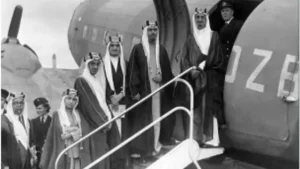
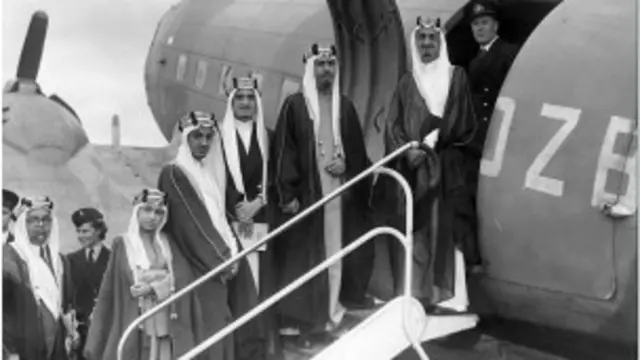
The journey of civil aviation in the Kingdom of Saudi Arabia began in 1945 with the Dakota (DC-3), the country's first civil aircraft. It was presented as a gift from U.S. President Franklin D. Roosevelt to King Abdulaziz bin Abdulrahman Al Saud following their historic meeting aboard the USS Quincy in the Bitter Lakes of the Suez Canal on February 14, 1945.

At the time, the aircraft represented the cutting edge of aviation technology. Following its arrival, several unpaved airstrips were established in Jeddah, Riyadh, Dhahran, Al-Hawiyah in Taif, Al-Hofuf, Buraidah, Jazan, Al-Kharj, and Afif. The aircraft was used to transport passengers and cargo between Riyadh, Jeddah, and Dhahran, marking the very first step toward connecting the Kingdom's regions by air.

Subsequent stages of development followed, until the Kingdom's aviation sector came to feature modern fleets of advanced aircraft, state-of-the-art airports connecting Saudi cities with countries around the globe, and a continually expanding destination network.

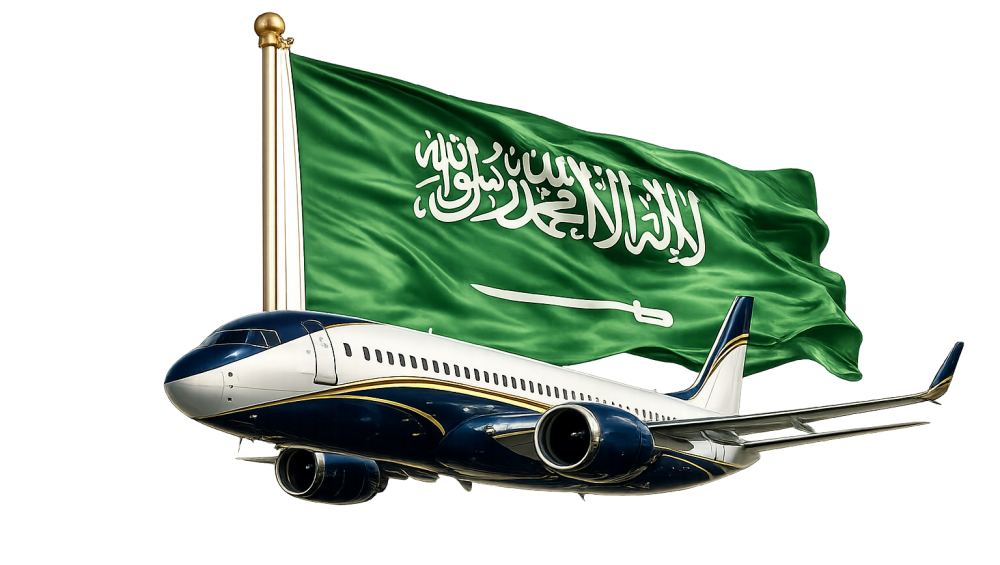
Today, the sector receives significant support under Saudi Vision 2030, which aims to solidify the Kingdom's position as a global hub for aviation, tourism, and logistics.

CategoriesNews

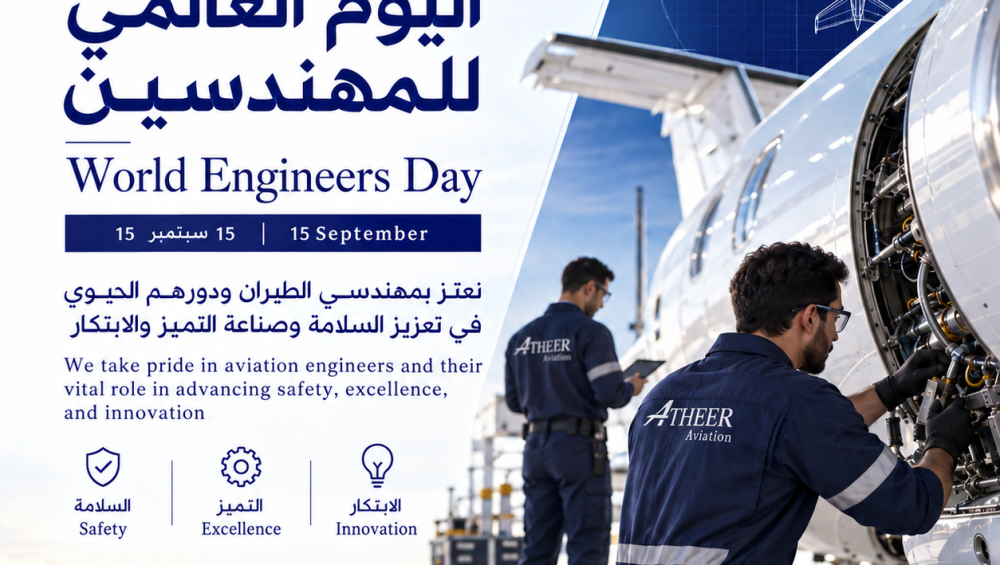
World Engineer's Day

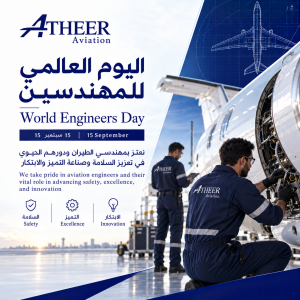
On World Engineers' Day, we at Atheer Aviation take immense pride in our aviation engineers and their pivotal role in keeping our aircraft mission-ready, ensuring continuous airworthiness, and upholding the highest standards of safety and quality.

Happy World Engineers' Day to the engineers of Atheer Aviation —the true cornerstone of aviation safety and operational readiness.

CategoriesNews

King Salman International Airport continues to implement its development stages

Development work continues King Salman International Airport In Riyadh, within the objectives of Saudi Vision 2030, the project is witnessing progress in the implementation of infrastructure and operational facilities in preparation to become one of the largest airports in the world. The current phase aims to enhance the airport's readiness to accommodate the growing growth in air travel and transportation.

It is planned that the airport's capacity will reach 120 million passengers annually by 2030With later expansion to 185 million passengers annually by 2050In addition to handling capacity of up to 3.5 million tons of air cargo Annually. The project will also include Six runways for aircraft Several modern halls, which enhance Riyadh’s position as a global center for transportation and logistics services.

The project is one of the most prominent strategic projects in the Saudi aviation sector, contributing to supporting economic growth, enhancing air connectivity between the Kingdom and the world, and providing a sophisticated travel experience based on the latest technologies and sustainability standards.


Source: King Salman International Airport Development Company (https://ksia.sa/).

CategoriesNews

The General Authority for Civil Aviation continues to work on organizing advanced air transport

The General Authority of Civil Aviation (GACA) continues to develop regulatory frameworks for Advanced Air Mobility (AAM) as part of its efforts to establish the necessary regulatory and technical requirements for this sector.

Current efforts include studying the operational requirements for Electric Vertical Takeoff and Landing (eVTOL) aircraft, mechanisms for integrating them into existing air navigation systems, developing specific requirements for vertiports, and reviewing aspects related to air operations safety.

This work aims to establish a regulatory framework that supports the adoption of Advanced Air Mobility technologies, in compliance with applicable laws and standards in the civil aviation sector.


المصدر: الهيئة العامة للطيران المدني (gaca.gov.sa).

CategoriesNews

Saudi Arabia ranks among the top 10 global aviation markets

Recent reports issued by the International Air Transport Association (IATA) For the year 2026, the aviation sector in the Kingdom of Saudi Arabia achieved qualitative breakthroughs, placing the Kingdom among the top 10 aviation markets worldwide. This achievement reflects the success of the national aviation strategy in enhancing global air connectivity, as the sector directly contributed to the Kingdom’s GDP worth over $90 billion.
These figures confirm the continuous expansion of national carrier fleets and the development of airport infrastructure, which enhances the Kingdom’s role as a global logistics hub connecting the three continents and supports the objectives of Saudi Vision 2030 in attracting international investment and revitalizing the tourism sector.